A sincere thank you to all of you who take the time to leave a comment. I read and appreciate each one.

Sunday, July 19, 2015

A Morning Walk

     Our town has been developing a wonderful walking path system over the last several years. One of the places we enjoy walking is the South Park Nature Area. Although back in May there was a time when you needed a boat.


This is the walking path with the creek on the right

     Fortunately the water receded awhile ago. This morning was a lovely day for a walk.  I thought I would share some of the sights we encountered along the way.

Here's the Hubby with our dog "Wally" (the blond) and our friends dog "Artie" (the brunette)

This baby was curious but Mom was keeping a close eye on us.


Here's some baby white tail deer we spotted running through the field. I barely had time to snap a picture.

 wild rhubarb

The dogs enjoy some creek time


 chamomile growing wild

Love the wide open spaces of Wyoming. The Big Horn mountains in the background

     It's wonderful to have this area only a couple miles from our house. It's fun to see how things change as the seasons change. There is always something new to see.


A thought to ponder: To be interested in the changing seasons is a happier state of mind than to be hopelessly in love with spring.


Tuesday, July 7, 2015

Garden Therapy: Swing into Summer

     There's something about a swing on a warm summer evening. It seems to me to be the perfect example of summer. That's why a swing was one of the first things we built in our backyard when we moved into our new home over twenty years ago. Since our garden was just starting out and we didn't have any large trees to hang a swing, my husband built a place for one.

July 1994

     The above picture shows the start of his project. My husband got some inspiration from magazine photos. He then drew up his own design.

August 1994

     Here's the finished project, before we painted. I had a cushion made covered in waterproof fabric.

September 1997

    And here's some changes three years later. We added the rock to make it feel a little more grounded.

2009

     Twelve years later and the trees are growing nicely. The swing is located toward the back of our property. It's a lovely place to sit in the early evening and gaze over our garden.

2012

2014

     Here's what it looks like now. As you can see we've made a few more changes. But isn't that what creating a garden is about. Nothing is static, but always changing and evolving. It is in need of some painting which is on my to do list for this year.


A thought to ponder: Enjoy the little things in life....for one day you'll look back and realize they were the big things.                                     Robert Brault


Monday, June 8, 2015

Garden Therapy: Rhubarb Time

     When you live in Wyoming the warmer days and nights of summer are welcome. But one advantage of living in a northern climate is the wonderful Rhubarb we can grow. This time of year brings on an abundance of the red sour stalks. Rhubarb is an ancient plant that traces back to 2700 B.C. China. It is considered a vegetable, although most people eat it as a fruit. In 1947 a New York court decided because most people eat it as dessert it should be classified as a fruit in the U.S.  This was done for the purposes of regulation and duties. Either way it can be very tasty. 


     We have three plants this size. More then enough for us and plenty to share. An easy way I like to use Rhubarb is to make a compote. I cut the stalks into bite size pieces and put about 4 cups in a saucepan. Add water to cover and sugar to taste. Bring to a boil and simmer until the rhubarb breaks down and becomes soft. This makes a nice sauce to use over pancakes or anything else you think sounds good.


     I think my favorite way to enjoy rhubarb is as a drink. Several years ago I found a great recipe called Rhubarb Lemonade Spritzer. The nice thing is you can make up the syrup and have it on hand for a refreshing drink whenever you like. Although around here a batch doesn't last too long.

Rhubarb Lemonade Spritzer

6 cups water
1 cup natural cane sugar
6 cups coarsely chopped fresh rhubarb
zest and juice of 1 medium-large lemon
(about 1 tablespoon zest and 4 tablespoons juice)

In a saucepan, bring water and sugar to a boil. Add rhubarb. Return to a boil, then simmer over low heat for 5 minutes. Add lemon zest and stir gently. Strain into a bowl, allowing pulp to drain for 10 minutes without pressing. Pour liquid into a pitcher and add lemon juice. Refrigerate at least 1 hour.

To serve mix one portion syrup with an equal portion of unflavored sparkling water or a sparkling wine, such as Italian Prosecco.

Here's our grandson helping with the rhubarb harvest. (2011)


In case you don't already know the leaves and roots are poisonous to eat, they contain oxalic acid.

     My husband likes to pull off a stalk and eat it raw. It's a little too sour for me. I prefer the above mentioned ways. When the extreme summer heat hits then the rhubarb pretty much gives up and we have to wait until the next year. But cut up into bit size pieces it does freeze well. If you'd like to learn more about growing rhubarb check out this helpful site: Growing Rhubarb.

Here's a walking path of creeping thyme (rhubarb to the left)

Although you don't want to walk barefoot this time of year.


A thought to ponder: "Nature does not hurry, yet everything is accomplished."
                                                                                                  Lao Tzu


Monday, May 25, 2015

Big Boys Don't Cry

     Emotions, we all have them, some we celebrate others not so much. Emotions are usually divided into positive and negative. Examples of positive emotions: love, happiness, joy, hope, enthusiasm, trust, gratitude. Examples of negative emotions: fear, anger, guilt, jealousy, worry, grief. These are just a few examples of the many emotions that we all can experience. If we feel a certain emotion whether positive or negative, it is still our emotion and it is real. For me it is this realness that makes all emotions valuable.


     Anger is considered a negative emotion. But if left bottled up anger can cause real harm to a person's well being. On the other hand if your anger gets out of control and you hurt another person either verbally or physically then that's not OK. But still it is a legitimate emotion that hits us all at one time or an other.
     A number of years ago when we were moving, my husband accidentally broke part of a mirror. It was a full length beveled mirror my mother had given me. He was being careful but when he set the mirror down on the ground to get a better grip it hit a small rock and a corner broke off. Needless to say I got very upset. My husband defended himself saying, "I didn't do it on purpose". I angrily replied, "I know you didn't do it on purpose. I'm not mad at you, I'm angry that the mirror broke. I have a right to be angry about that". Now my husband can be pretty smart at times. This was one of those times, he shut his mouth and didn't say another word. I fumed for awhile and then I got over it. Because in the big scheme of things a broken corner or even mirror isn't the end of the world. I hung the mirror at our new home where it remains today.


     Have you used an emoticon recently in a email or Facebook post? When you write to someone it can be difficult sometimes to convey the way you're feeling. The creation of emoticons has helped us give people a little better idea of the tone of our message. But really nothing beats talking to someone in person; to hear the tone of their voice; to see the expressions on their face. This is what makes face to face interaction more valuable. Negative emotions in others can make us uncomfortable. Many times we just want them to go away.
     Crying is one of those emotions. We can cry for many different reasons, here's an interesting article on Why We Cry. When someone is crying sometimes our first instinct is to try to get them to stop and to feel better. Maybe instead we should be saying, "Go ahead and cry, get it all out".


    One day when our son was about three years old I was going to the post office. I don't remember what but something had upset him and he started to cry. I carried him into the building, as we stood in line he continued to cry. The lady behind me said to my son in a cheerful voice, "Big boys don't cry". I looked at her and said, "They do if they have something to cry about". Now I know that she meant well but it still annoyed me. First of all he was only three, far from being a "big boy". But more important I believed then and still do that boys/men have as much right to cry as girls/women. Implying that a child's feelings are wrong is not helpful.
     We need to accept that we all have a wide range of emotions, it's what makes us human. The positive ones are easier to deal with. It's the negative ones that can get us into trouble. We shouldn't necessarily try to ignore or suppress them but we also shouldn't let them get out of control. Showing no emotion is no better then going overboard with every emotion. How we each express our emotions is influenced by numerous factors: culture, gender, family dynamics, etc. Many studies have been done on this subject and I'm sure there have been papers written about almost every emotion. 
     For me helping a child learn to deal with negative emotions is very important. I don't think a child should be told they're bad if they feel anger, jealousy, fear, etc. But rather help the child to understand (appropriate to age) why they are having these feelings. And then help them to learn constructive ways to deal with them. Sweeping something under the carpet is never helpful. I know it is easier said then done but we must learn to face the hard things head on.

Our son at three, 1974


A thought to ponder: "Feelings are much like waves, we can't stop them from coming but we can choose which one to surf."                  Jonatan Martensson


Participating in: Let's Talk MommyShare the Joyl

Monday, May 11, 2015

Garden Therapy: A Deep Subject

     As I mentioned in my last Garden Therapy post we have a large lot, about a half acre.  We live in the city so we receive city water. But because we have such a large area to keep watered we decided to put in a well.  The state allows home wells as long as they're only used for irrigation ( otherwise the water must be tested). All we had to do was pay a small fee and fill out a form which also showed where the well would be located.
     That was the next task, figure out where to put the well. After walking around the yard I decided on a spot about half way between the back of the house and the very back of the yard and half way from side to side. I thought that's where it would look best and we'd hopefully be able to water the whole back yard. Of course we had to hit some water to pump.


     We then had a fellow named Steve come with his backhoe to dig a hole.  Before that my husband had purchased a 21 foot (we were thinking positive) metal culvert with a 24 inch diameter. He took a pick ax and made numerous holes in the side of the culvert.
     Steve started digging. At seven feet water began gushing. My husband's first thought was that they'd hit a water pipe. He quickly realized that wasn't possible as there were no pipes in the area.  Steve continued to dig with water pouring into the hole. Finally at 15 feet he had to quit digging. There was so much water that the sides of the hole kept caving in, he couldn't go any deeper.
     So we put the culvert up right into the hole, leaving 2 feet above ground, the excess was cut off. We filled around the culvert with gravel  then topped with dirt. We now had a 15 foot well with lots of water. But the big question was would it water our big yard and for how long?
     That was over twenty years ago and the well has never gone dry. We can water for hours at a time all summer. Even several years ago when our area experienced a drought and the city water was put on restrictions, our well continued to flow.


     A two foot piece of metal culvert sticking out of the ground with a pump sitting next to it wasn't very attractive or safe. So my husband built a wishing well around it.


     A friend who is a stone mason did the rock work. He used stones that came from the hole they dug for the foundation of our house. You might have noticed the name on the well. One of the requirements when you register your well with the state is to give it a name and number. My sign is Aquarius, the water bearer, and we were married in 1966. Seemed like the perfect choice.


     Many times when we tell people about our well, how I picked the spot and how much water we get. They will tell me I should take up water witching. I just laugh and say it was just dumb luck.

Here's a well I built recently with the help of our grandson, for our fairy garden.


A thought to ponder: "The grass isn't greener on the other side. It's green where you water it."


Friday, April 24, 2015

An Odyssey

     Two of my friends lost their dog companions last month. Those who have gone through this experience can understand the pain of this kind of loss. It got me thinking of the many dogs and cats we have had over the years. Each one unique and special in their own way.


     When our children were little and we bought our first house we felt we could get a dog. So my husband took our son and daughter to the local animal shelter. When they came back they had a little poodle mix puppy; we named him Ulysses. We also had two cats at the time. They all managed to adjust to each other, mostly through indifference, and Ulysses became a part of our family.


     When Ulyssess was 13 years old, although housebroken for many years, he started having urination accidents in the house. Where before he was able to go all night, he now could barely go four hours without going out to pee. We were at a loss to understand this change. My husband made the comment one day, "he sure has been drinking a lot of water lately." The light went on in my nurse brain, 'frequent urination', 'great thirst', Bingo! Diabetes. I took him into the vet and sure enough his blood sugar was sky high. Diabetes can be managed in dogs as in people, by checking sugar levels and giving insulin. 
     With Ulysses we had to check his sugar level in his urine twice daily and give him an insulin injection based on the results. Being a male dog made it a little easier to collect his urine. I had a pan I used when he lifted his leg. I would have to get the morning sample first thing when we got up. Most of the time he was pretty fast about going, but once in awhile he would take off running around the yard. On those occasions I'm glad we had a high fence around our yard. I'm sure the neighbors would have wondered about the crazy lady in her nightclothes, and a pan in her hand, chasing a dog around the yard. 

Ulysses wins a prize for best dressed

     Getting an injection twice a day wasn't Ulysses favorite thing, so he tried ways to get me to stop. When I would come toward him with the syringe he would turn over on his back. Since I gave the injection in his neck area I would have to turn him over. When he realized turning over wasn't going to stop me, he started yelping every time I gave him the injection. I felt badly but we were using regular insulin needles which are quite thin. One day when getting ready to give him his insulin I wiped the area with an alcohol swab and just before I gave the shot he yelped. I looked at him and said, "You big faker, I haven't even done anything yet." He eventually accepted the inevitable. He lived for another three years and did fine until the very end of his life at 16 years.


     If you decide to get an animal companion, then it is a commitment not to be taken lightly. For us they become part of our family for better or worse, in sickness and health. Some people seem to think if an animal becomes a nuisance then just get rid of them. When my husband was at work and talking about Ulysses and what we needed to do for him, one of his colleagues voiced this sentiment. He thought it sounded like a lot of trouble and why didn't we just put the dog down. I found this very upsetting when my husband told me what was said. It took us maybe 10-15 minutes twice a day, not much of a hardship as far as I was concerned. I asked Al what he said to the man. In his usual straight forward and blunt way, he told him he was a bigger pain in the ass then the dog, so maybe we should get rid of him.
     To love anyone, whether person or animal, opens you up to the possibility of being hurt. For the most part we are probably going to out live our animal companions. But that could be true of a person also.  So do we shut ourselves off from all love so we won't have to feel the pain of loss? Yes, it has hurt terribly every time I've had to say goodbye to one of our animals. Would I change having had them in my life. Never. The happiness I receive from my animal companions out weighs any heartache. I can never regret loving anyone in my life. Each one, person or animal, has added something special and enriched my life. It is very sad to loose someone you love, but it is tragic to have never loved.


A thought to ponder: "Love doesn't make the world go 'round. Love is what                                       makes the ride worth while."          Franklin P. Jones


Monday, April 6, 2015

Garden Therapy: Certifiable

     Spring arrived on the calendar several weeks ago. But now I know it's really here because everyday the grass is a little greener, the leaves on the trees are a little bigger and my daffodils are starting to bloom. I love watching my garden emerge from it's winter slumber. I've been thinking about how far our garden has come in the last 20 years. How we took it from nothing to a certified wildlife habitat and beyond.

     It's easy to become certified through the National Wildlife Federation. It doesn't matter the size of your garden, all you need to do is provide food, water, cover and a place to raise young in a healthy habitat.  We didn't start with the intention of making a backyard habitat. We just had a bare piece of property that needed to be landscaped. 

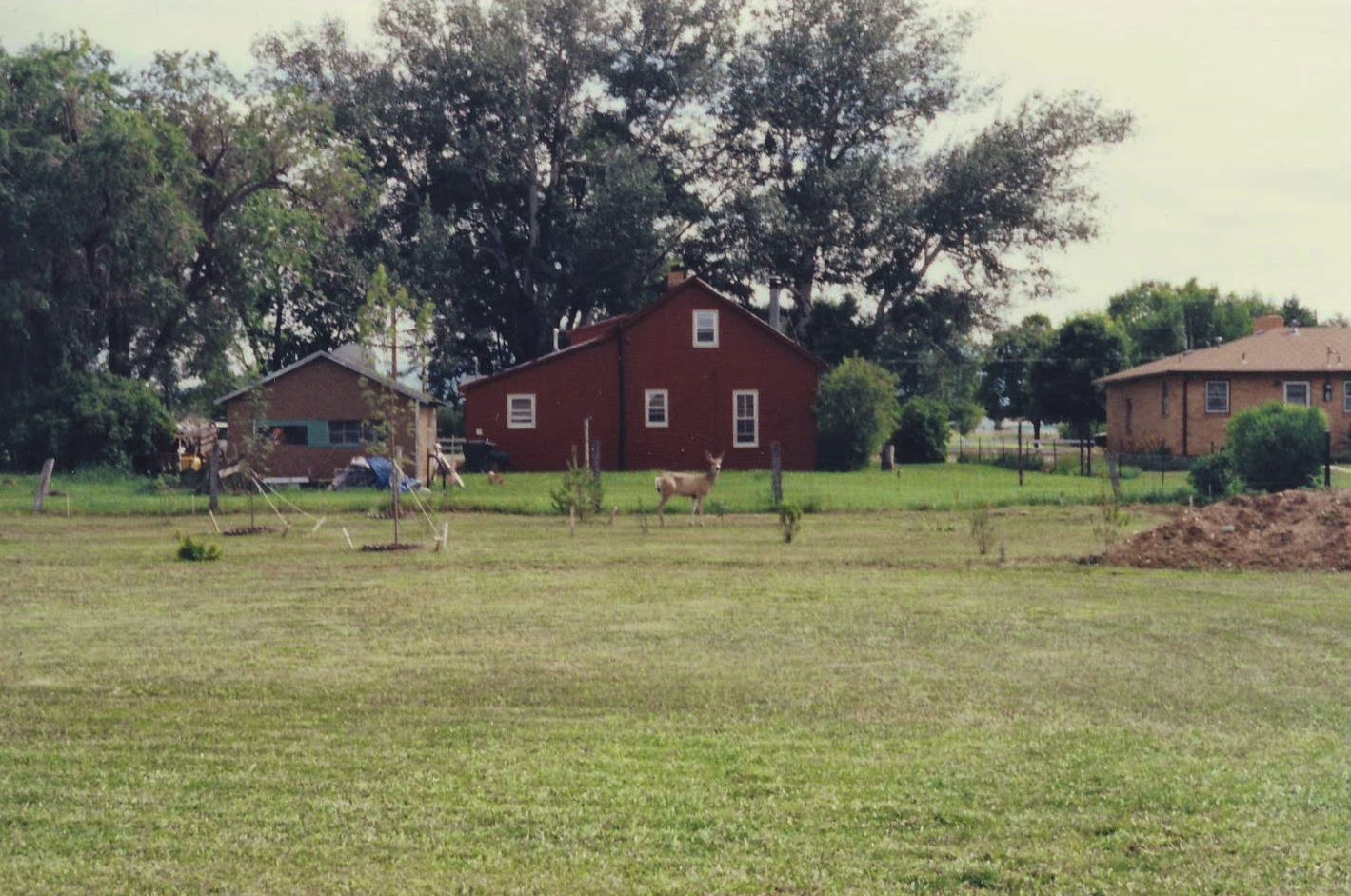
1993  Looking toward back of property before we put up a fence.

     We started by planting 5 trees and a few shrubs, and trying to decide what would be hardscape; what would be grass; where to put a vegetable garden, etc. After several years we had a nice start and things were growing well.

same view  2002

     I don't remember how I discovered the National Wildlife Federation backyard habitat program. But when I read about it I realized we could qualify. Because our yard is large (1/2 acre) I had been keeping a record of what and where we planted things. So I already had a list of plants to send them. I just needed to take a few photos and fill out their form.

2014

     There are about 200,000 certified backyard habitats. They have found that "certified habitats attracted and sustained nearly four times as many native bird, mammal and beneficial insect species as did nearby noncertified properties." We have certainly seen an increase in the number and variety of wildlife in our yard. See this post for a look at our wildlife:Who's in Your Garden?   I bet there are many gardens out there that could qualify if only the gardeners were aware of this program.

1993  back of yard 


     We now have over thirty trees (10 are fruit) and over a hundred different perennials, shrubs, herbs and roses. Many things have changed in our garden over the years. But I believe that is what makes gardening so enjoyable. My husband learned early that when I stand looking out at our backyard and say, "I've been thinking", he goes and gets his shovel. We do feel pride in our garden because the majority of what is here we did ourselves.


2014  a more recent shot looking toward back of house

     I will cover individual projects in up coming Garden Therapy posts. I hope this one will encourage you to take the first step to become a certified backyard habitat. That step starts with visiting this site: Garden for Wildlife


A thought to ponder: "A garden is a grand teacher. It teaches patience and careful watchfulness; it teaches industry and thrift; above all it teaches entire trust."              Gertrude Jekyll